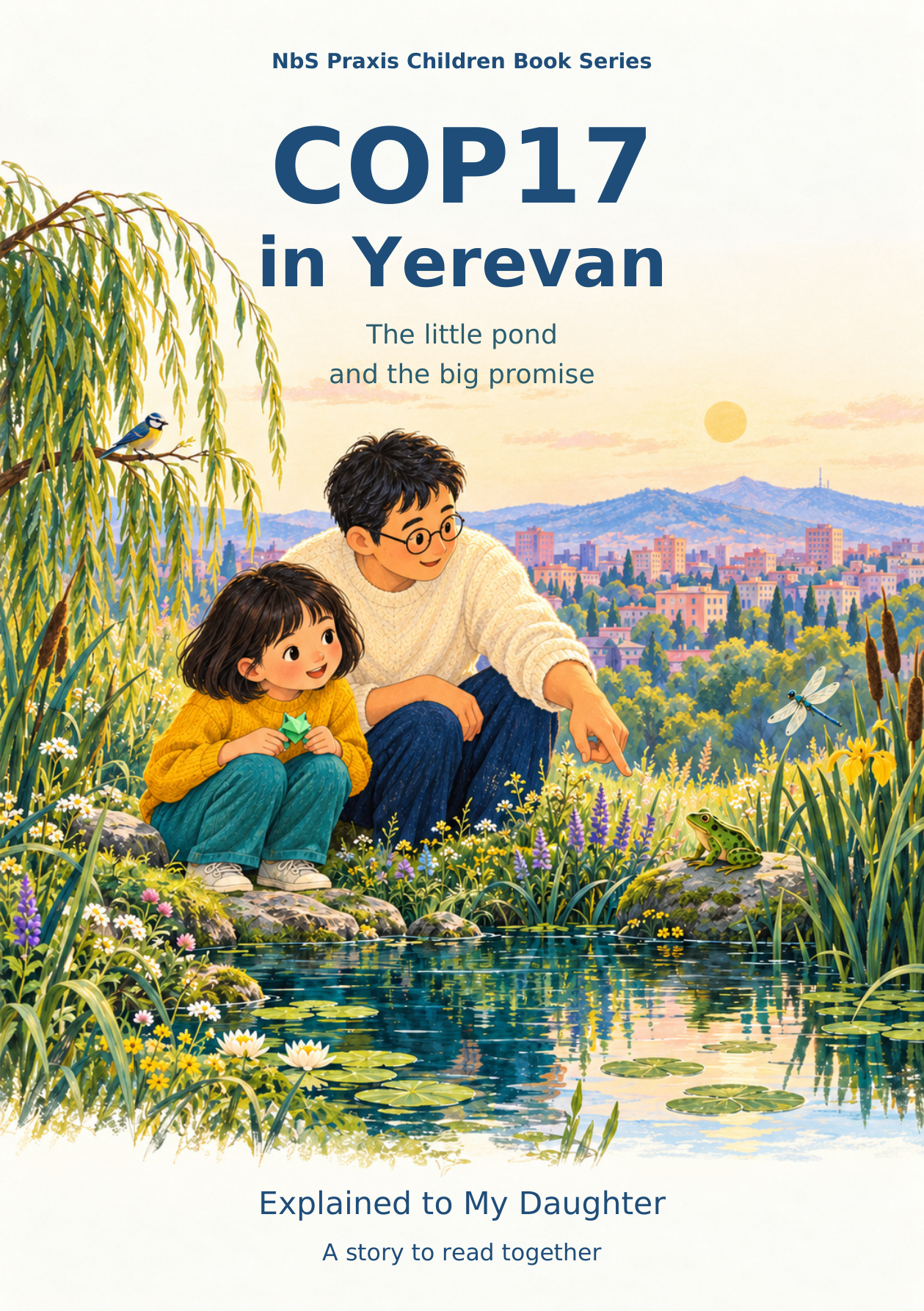
COP17 in Yerevan, Explained to My Daughter
Can a big meeting help a little frog? A picture story about a pretend pond, nature’s many homes, and the work that turns a promise into care, for children aged six and up.
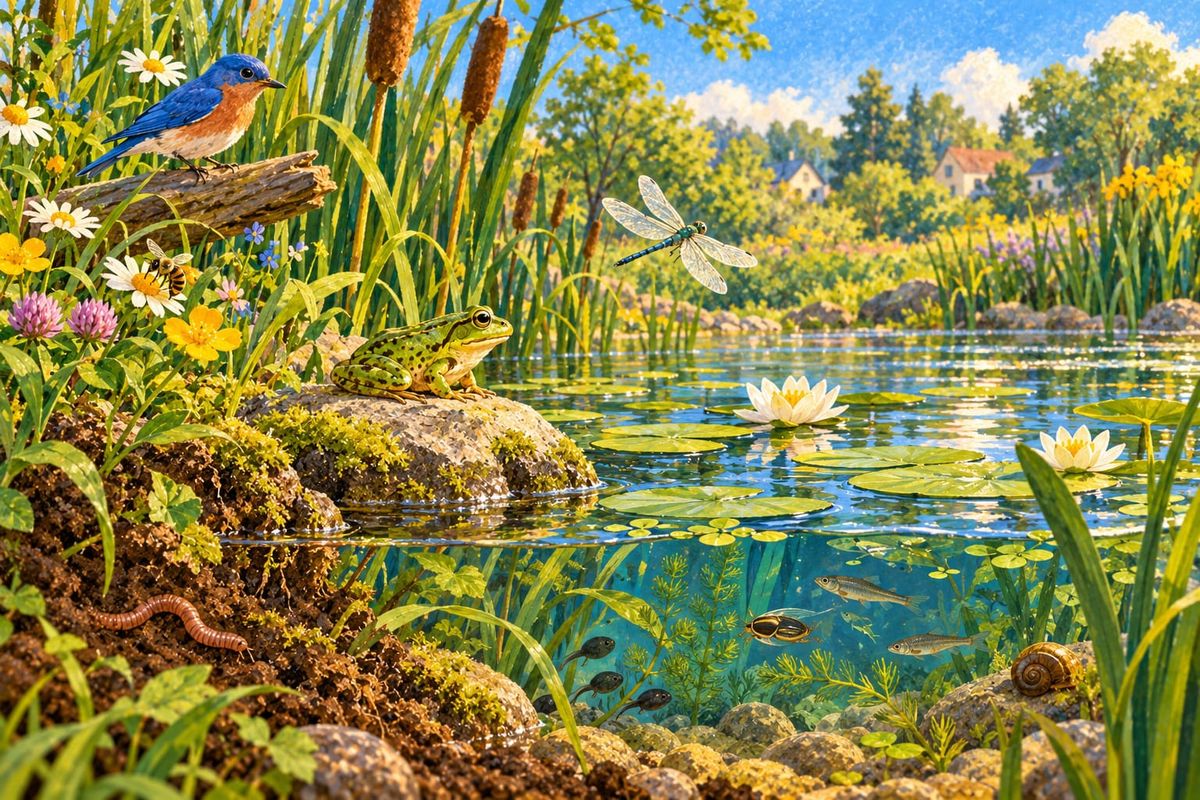
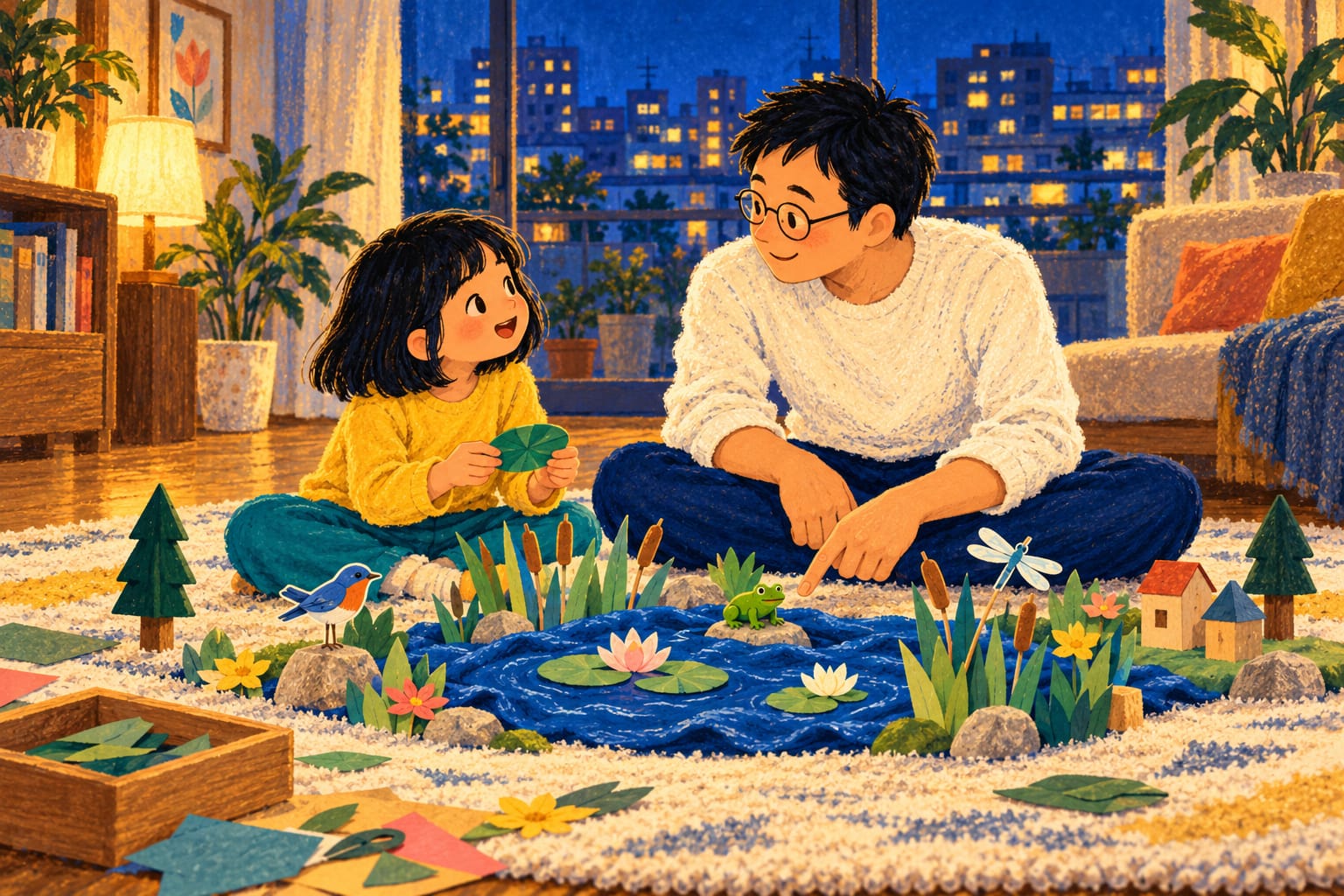
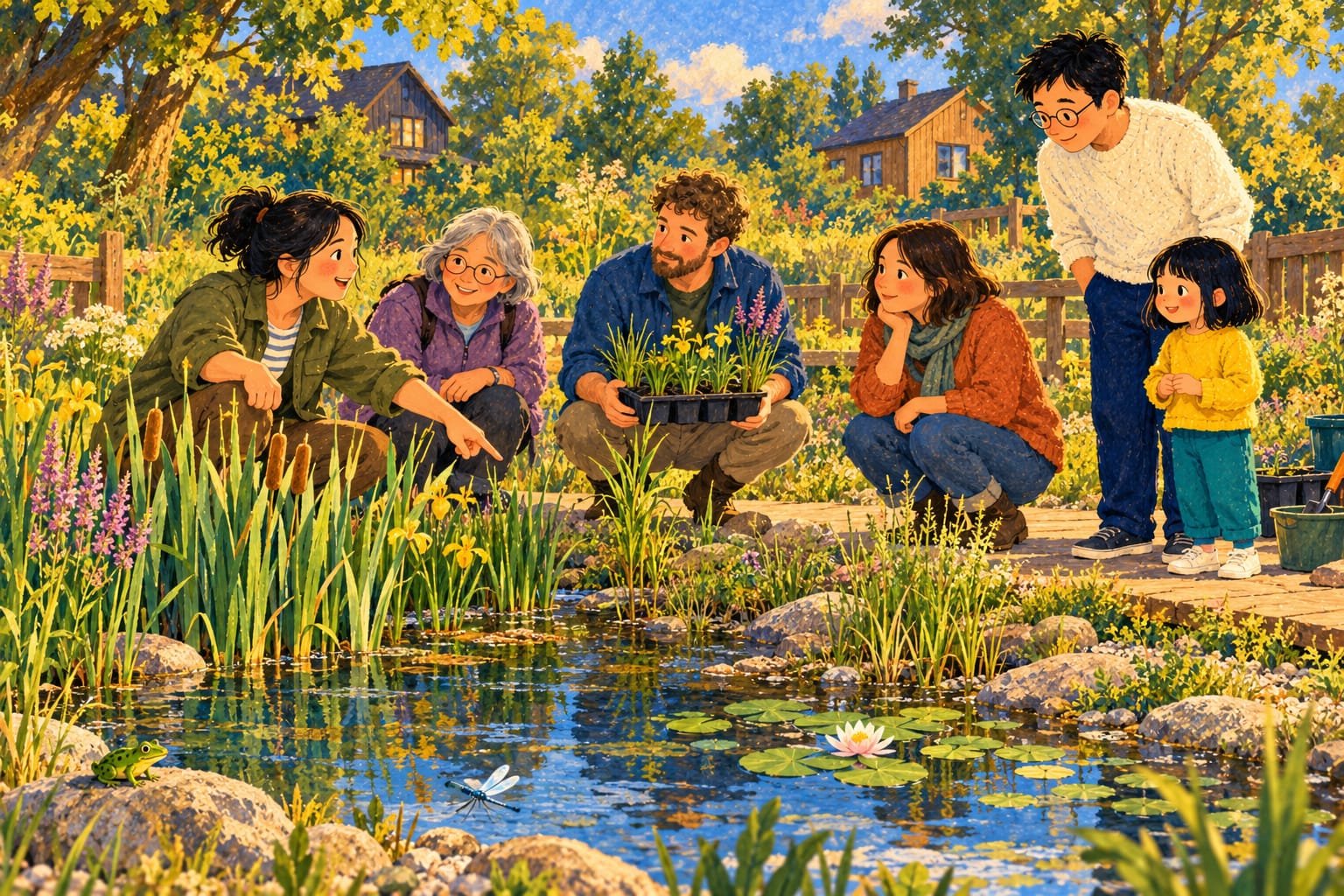
The biodiversity conference COP17 concluded in Yerevan, Armenia, on 31 October 2026.1 In this story, a girl asks her dad what the big meeting was about. He picks up her little green frog, and they spread a blue cloth on the living-room rug. With paper reeds, flowers, trees and a bird, they build a pond and begin discovering who needs it.
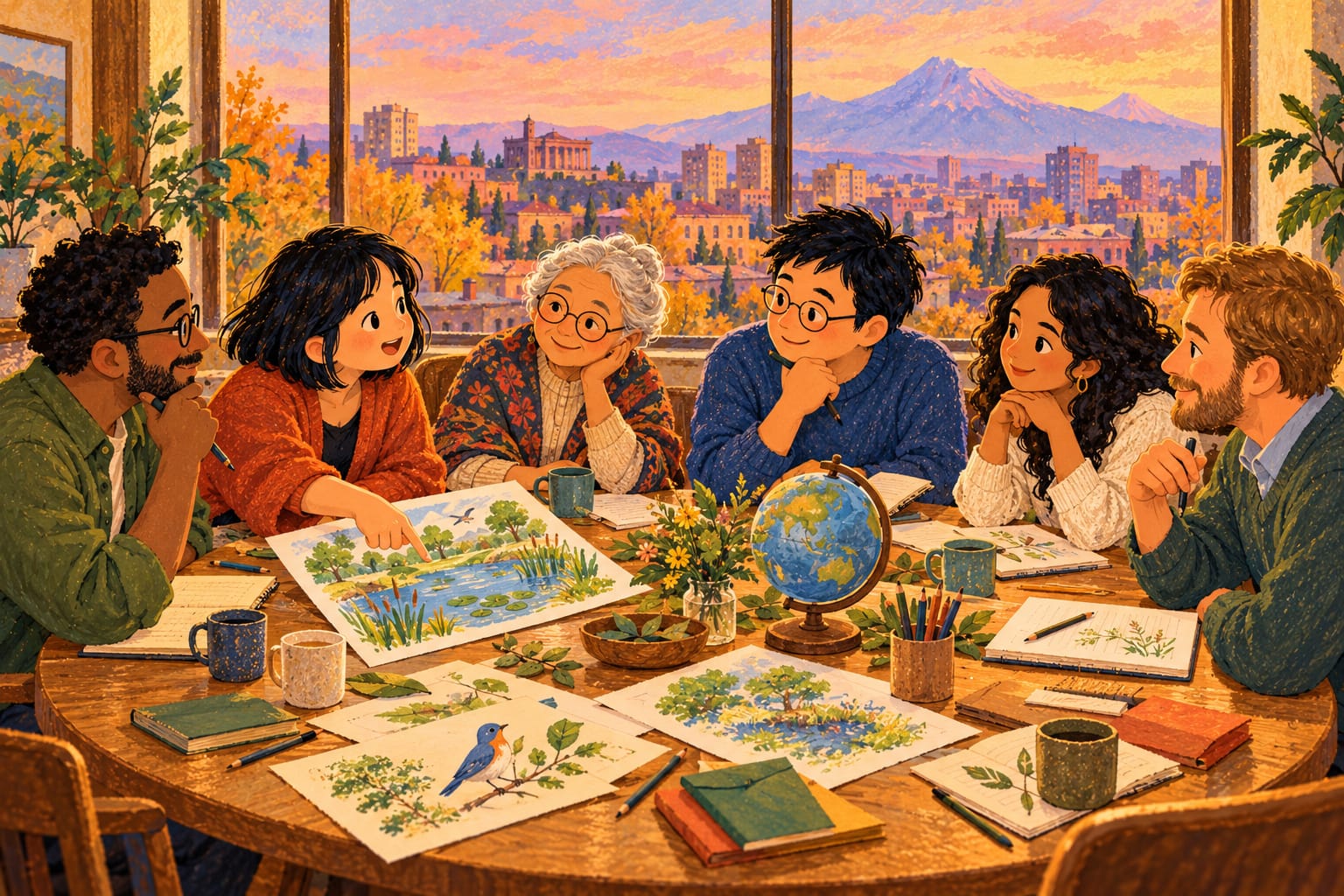
Their little pond opens a much bigger conversation. What happens when a home is damaged? Who should help decide how to care for it? Where do the people, tools and money come from? As Dad and daughter explore these questions, they discover why countries meet, what the Yerevan Pathway means, and why agreeing to help nature is only the beginning.
Read, print, or open on an e-reader
Print settings for the A5 PDF
Choose A5 paper (148 × 210 mm), portrait, actual size (100%), and one page per side. For double-sided printing, flip on the long edge. Print all 36 pages in their original order.
How to print and fold the booklet
Choose A4 paper, landscape, actual size (100%), and double-sided printing with a short-edge flip. Print all 18 sides in file order. Keep the nine sheets in order, fold the stack in half with the cover outside, and staple along the fold.
The booklet’s pages are already arranged for folding. Leave the printer’s “booklet” option off.
The EPUB keeps the book’s illustrated page layout. Open it in a reading app that supports fixed-layout EPUB 3.
Words we met
Biodiversity: all the different kinds of life, including plants, animals and tiny living things.
Habitat: a place where a living thing finds what it needs.
Protect: keep something safe from harm.
Restore: help a damaged place become healthy again.
Agreement: something people decide together.
Resources: the people, tools and money needed for a job.
Pathway: a way forward. The Yerevan Pathway sets out steps to help countries move faster in caring for nature.
Try it at home: make a little habitat
Spread out some paper and choose a pond, garden or woodland. Draw three living things and add what each one needs: food, water, shelter or space. Use toy animals, paper shapes and crayons. Leave wild plants and animals in their homes.
Now give your habitat a problem. Perhaps litter has covered a corner, or a plant has disappeared. Ask your reading partner: what should stop, what needs care, and who will help?
Make one promise for your pretend habitat. Then explain what someone must actually do to keep it. A sign that says “Look after our pond” is a start; the next step is the work.
A note for grown-ups
This is a fictional family conversation about the Convention on Biological Diversity’s COP17, distinct from the United Nations climate conferences. Its pretend pond makes large questions about protection, restoration, finance and participation easier to discuss.
COP17’s first global review found that progress towards the biodiversity goals was off track. Countries adopted the Yerevan Pathway to accelerate action.1 The story keeps three things separate: an agreement, resources that reach the work, and improvements in nature that can be checked over time.
Restoration takes time. Local people’s knowledge, participation and rights matter. Children can notice, ask questions and care; governments and other grown-ups carry the larger responsibilities. The book’s final pages include activities, fuller explanations and ten endnotes. Sources for the book were checked on 1 November 2026.
Your turn
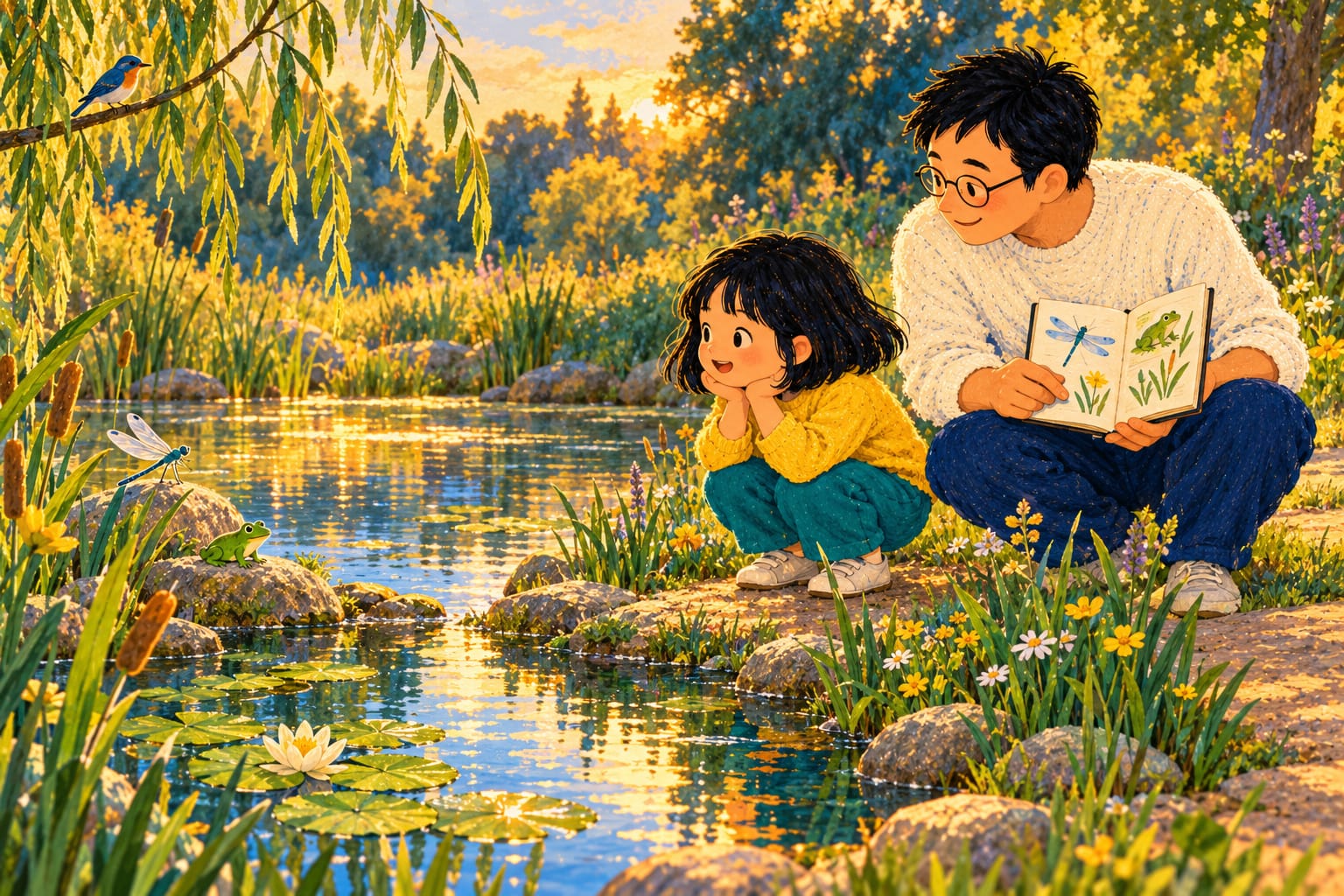
Which living things share your neighborhood? Look with a grown-up and choose one question about their home.
The daughter’s question is a good place to begin: “How is nature’s home doing?”
If the story starts a conversation in your family or classroom, I would be glad to hear about it. Write to hello@nbspraxis.com.
Based on an original idea of Martin Amar,
Produced under the creative direction of Hubert Jenny using Generative AI,
NbS Praxis Children Book Series
Endnote
1. Convention on Biological Diversity, COP17 closing press release, 31 October 2026. Additional sources and explanatory notes appear in the book.